Netflix Watch Party
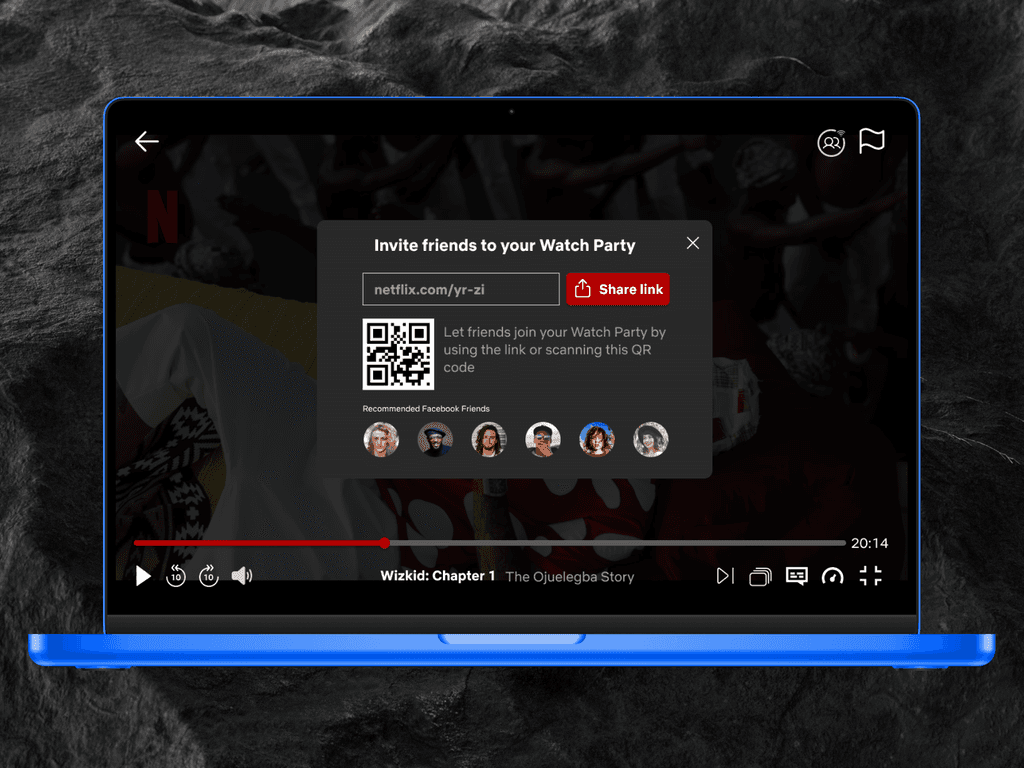
(Content Design Strategy) Rethinking Netflix Party, a social-streaming Google chrome extension that became popular during the COVID-19 lockdowns, as native feature
© Toye Sokunbi
Role: Product Designer, Content Strategist
Duration: 3 weeks
Background
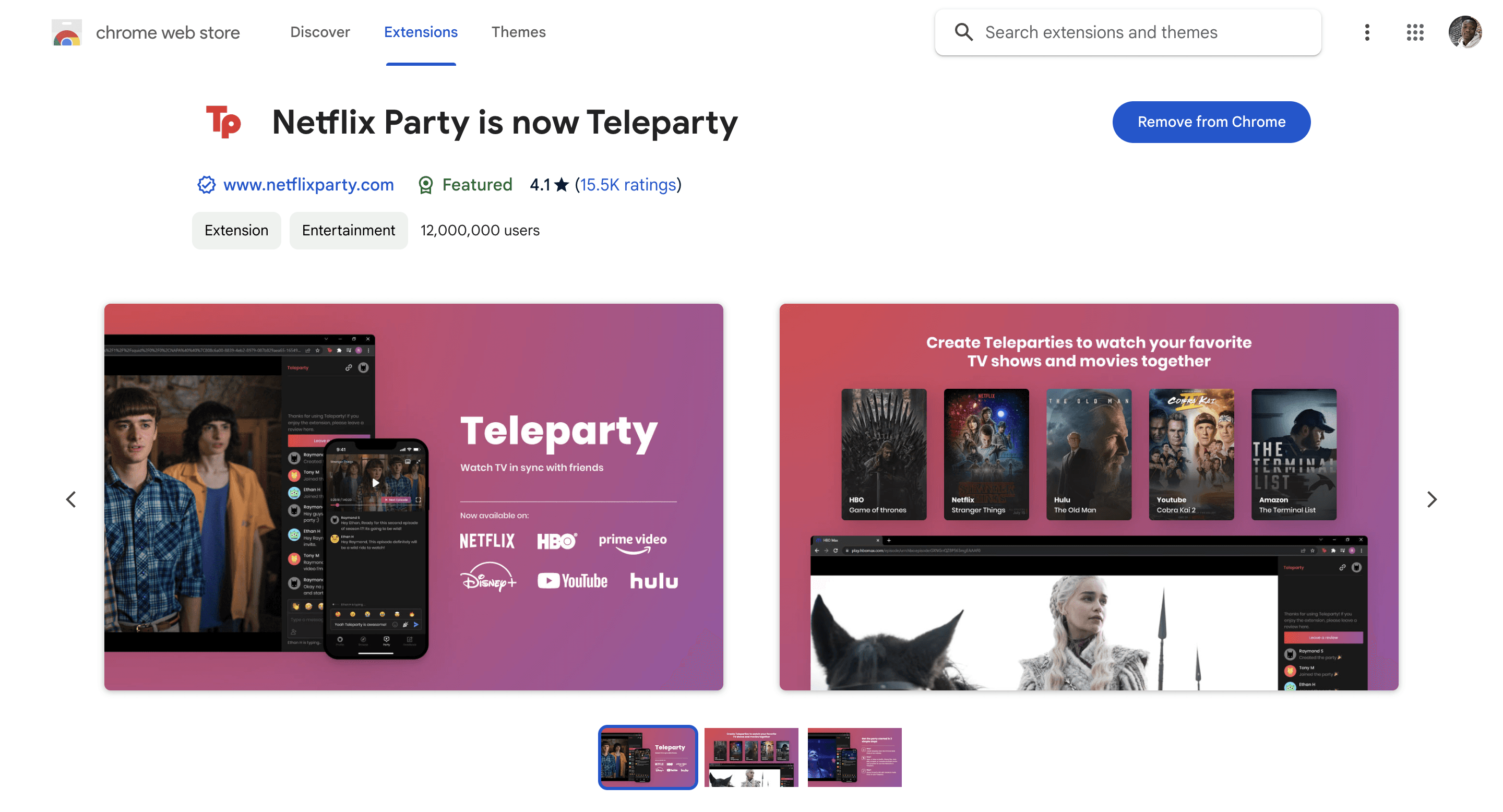
At the height of the 2020 pandemic, a Google Chrome extension called Netflix Party (now known as Teleparty) gained popularity as a social streaming feature that allowed friends to watch, emote and live-chat while streaming the same shows and movies. The concept itself didn't seem revolutionary at the time, but many people who were experiencing a doom-scrolling fatigue many months deep into months of isolation and lockdown, were desperate for innovative new ways to connect with their friends. Netflix Party was one of such products that gained steam as a result.
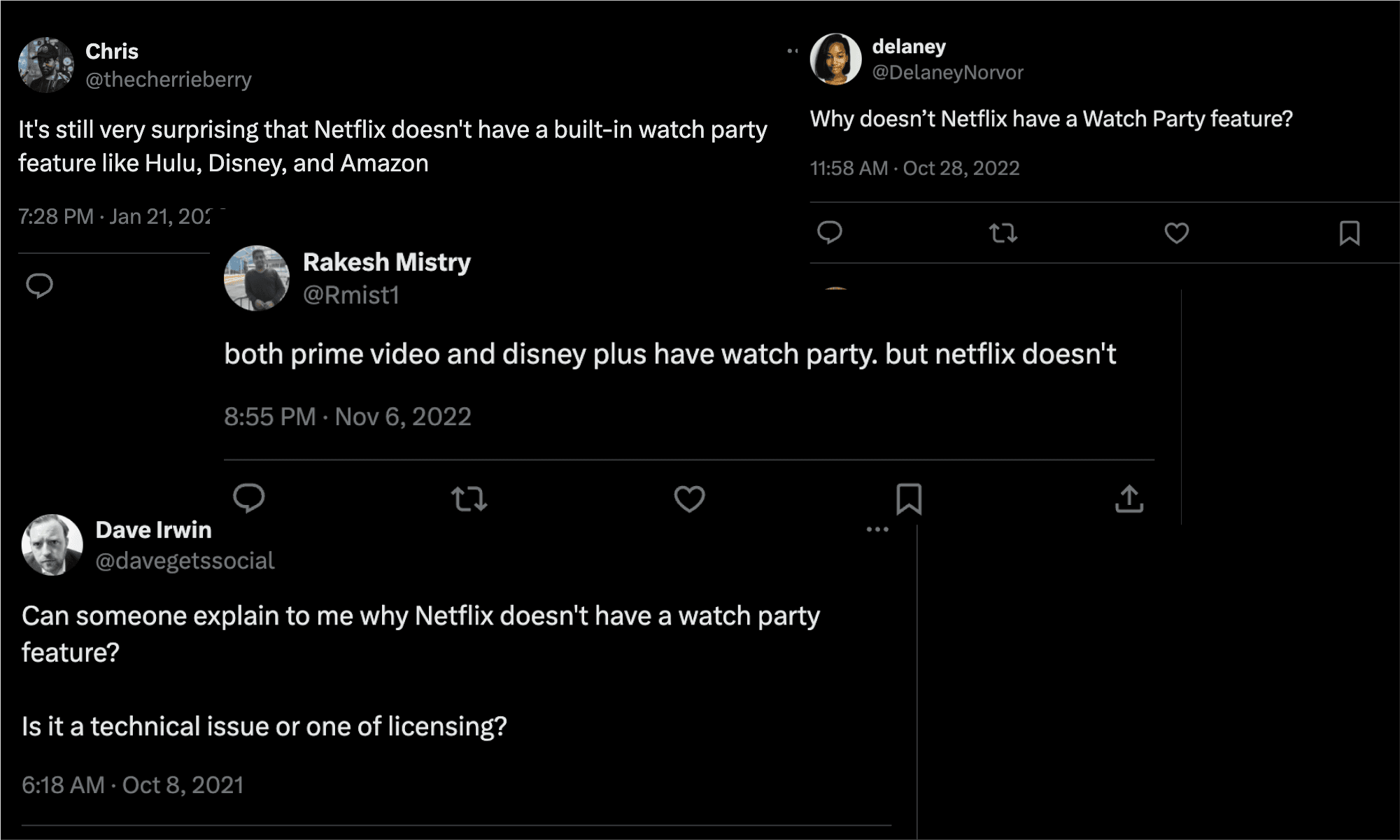
The popularity and perhaps use of Netflix party has petered since the end of the COVID-19 lockdowns, for a host of reasons ranging from limitations to only web browsers, to increasing concerns about security since it's a third-party service and Netflix has become stricter with who/what can access its API. Regardless, this change in popularity for Netflix Party hasn't changed audience demands for a fix to a core usability gap in the actual Netflix app: The absence of a social streaming feature.
The Problem

Thanks to the internet and globalisation, humanity may be in its most interconnected time in recorded history, but it's also somewhat the loneliest time. A recent study by Meta and Gallup across 140 countries revealed that nearly a quarter of the world's population feels lonely. It also doesn't help that due to rising global inflation many people are constantly working and therefore the struggle of balancing work and life becomes increasingly difficult.
Nearly all of Netflix's competitors have recognised this need for humans to have a sense of community in spite of the digital age, and to the effect, they all have a version of a Watch Party feature built into nearly all of their products. As the biggest movie and TV streamer in this market (by user base), Netflix has the opportunity to play its part in alleviating loneliness through an in-built group-streaming feature that allows friends and family to enjoy video content remotely.
Design Objectives
Ideate and visualise what a group streaming feature would functionally look like if it was built into the Netflix app
Introduce social elements to video streaming that doesn't sacrifice the core purpose of Netflix, which is to watch movies
The Process
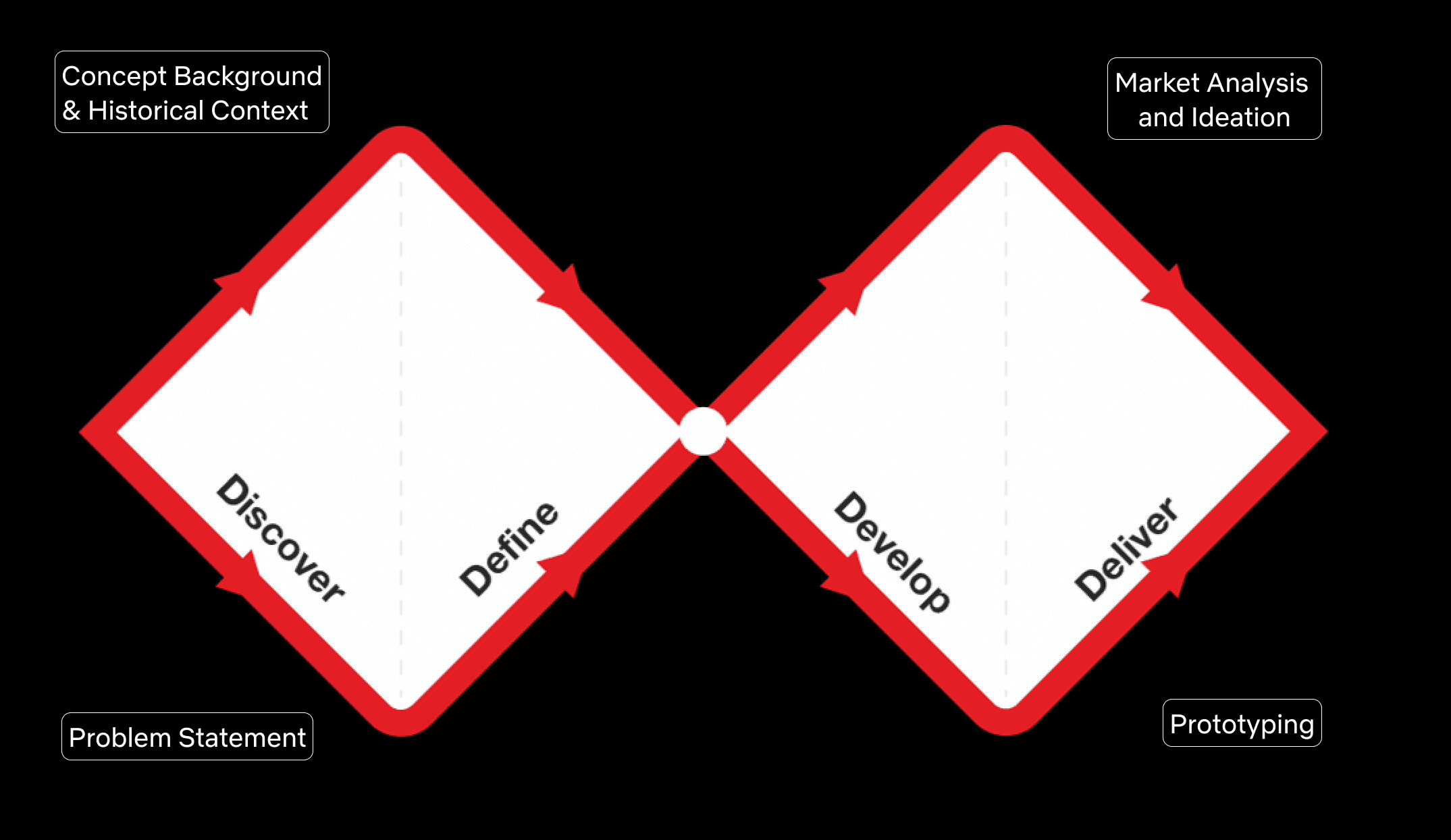
Scope: SWOT Analysis, Competitor Analysis, UX Research, UI Design & Prototyping
Tools: Figma, Google Sheets
Since 2020 when Amazon's Prime Video first launched its Watch Party feature, several streamers have followed suit, including Disney+'s GroupWatch (now discontinued), Hulu's Watch-Party and Apple's iOS-MacOS native, SharePlay. Yet, mounting pressure from the competition still hasn't forced Netflix's hand to release a group-streaming feature.
My Approach
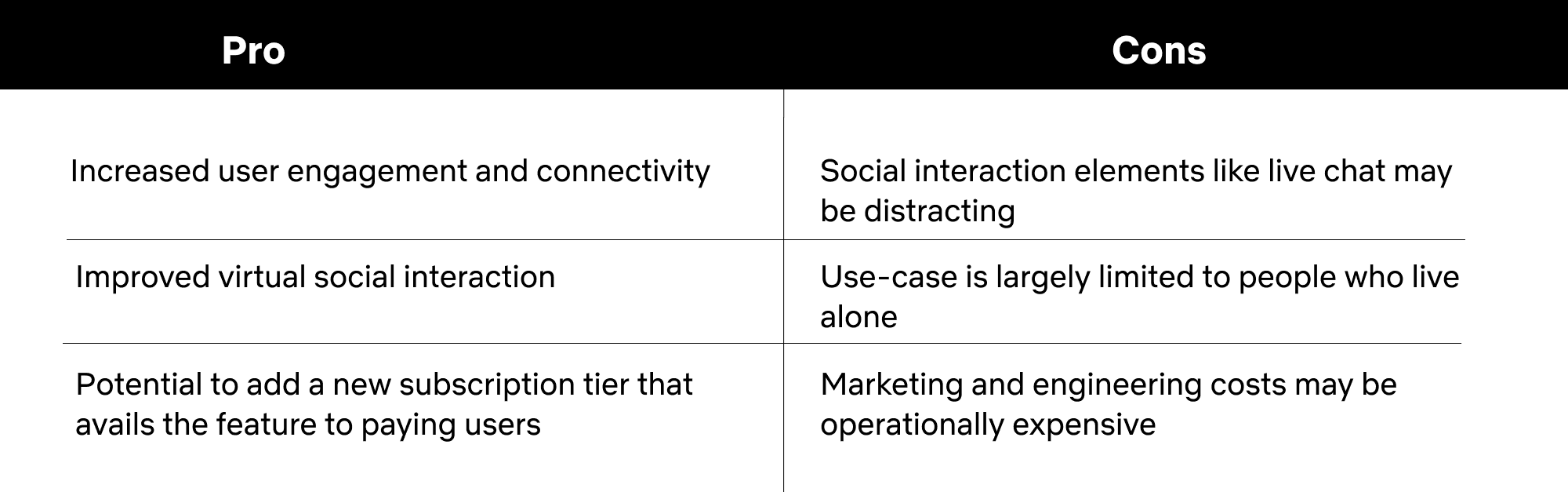
The obvious big question is why? Why hasn't Netflix introduced a Watch Party feature? The table above attempts to interrogate this question multidimensionally.
While the purpose of this design exercise is not to convince Netflix to develop and launch a Watch Party feature, I believe it is important to explore all the ways, a feature like this will improve user experience—especially when compared against what other players in the market are doing.
Market Analysis: Is the grass greener on the other side?
Prime Video: Amazon's Prime Video offers a Watch Party feature on native Android, iOS and Smart TV apps. Prime Video also offers a chat service for up to 100 friends who are also Prime Video subscribers, however, this chat feature is only accessible via native apps and supported browsers. Except for shows and TV shows exclusively available for rent or purchase, all other video content available on Prime Video can be group-streamed seamlessly.
Hulu: Hulu allows users to sync up to 8 friends on a single Watch Party. However, this feature only works on supported browsers and is available for 18 years and older subscribers.
Shareplay by Apple: Across Apple macOS, iOS and tvOS, users have the ability to use Apple's inbuilt screen-share to host group streams over FaceTime. In addition to owning an Apple device to gain access to SharePlay, there are also other obvious limitations such as in-stream chat being limited to only iMessage and hosts only being able to link up to 32 people.
Market Analysis: Conclusions
Group-streaming features are neither seamless to use, nor are they universally accessible to all users. Obvious limitations due to browser support, device requirements, age restrictions, and a cap on the number of guests who can join a group stream but to name a few, are examples of all the ways including a group stream feature may be both a software engineering and a logistical nightmare. The problem though, is that in the OTT (over-the-top) video market, audiences reign supreme.
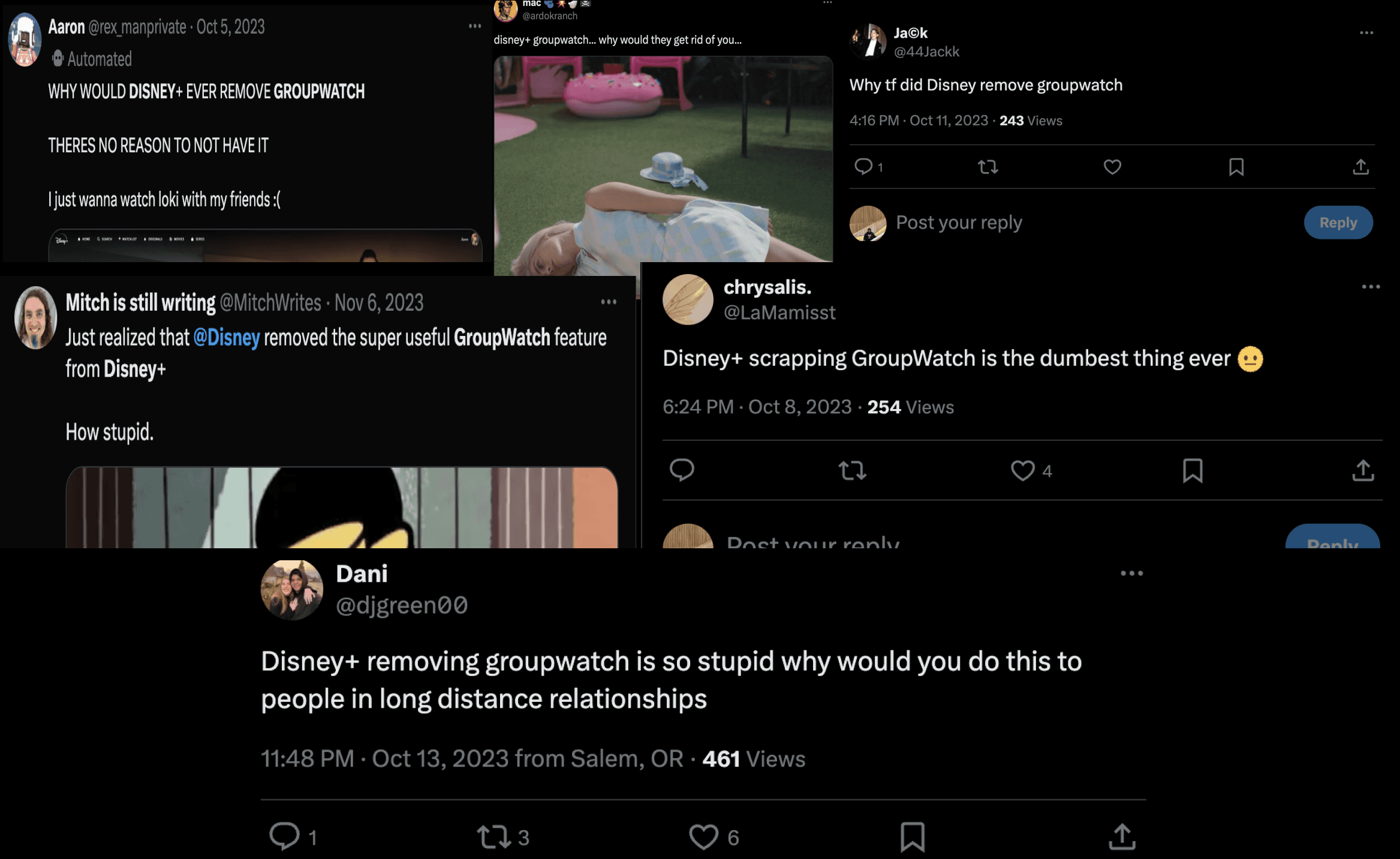
Evidence that group-streaming features are beloved by users who are willing to jump over all the usability hoops, can be summarised by the reactions to Disney+ silently pulling the plug on its Group Watch feature last year. Before Disney stealthy discontinued Group Watch, there had been occasional reports since the feature launched in 2020 of users being unable to load up Group Watch due to serverside issues at Disney. However, discomfort with the service didn't stop users from being heartbroken by the complete decommissioning of the feature. In fact, after the news became public, some users went as far as announcing that they would discontinue their subscription to the streaming service.
SWOT Analysis
Strengths: At the time of this analysis, Netflix has the largest user base of all OTT providers globally. That audience is served via a user-friendly interface, a diverse content library and a recommendation algorithm that ensures user personalisation.
Weaknesses: Aside from Watch Parties, the subject matter of this design exercise, Netflix's offerings for live content are very limited, especially for live sports, a product feature that many of its competitors including AppleTV, Disney and Hulu currently offer
Opportunities: Investing and launching a watch party feature. If this is combined with a foray into live sports streaming, Netflix may be heading for the moon as far as maintaining its lead in the market goes. The rapid rate of innovation in VR and AR spaces could also provide an opportunity for Netflix to tap into immersive storytelling to differentiate from competitors. This could pair nicely with attempts by the streaming giant to play in fields of gaming and interactive choose-your-own-adventure storytelling. All these can and will serve as complimentary features to the social element of a Watch Party feature.
Threats: The biggest threat to Netflix today is trends in short video consumption like TikTok and Instagram Reels. With dwindling attention spans, there's increasing demand for localised content, as such brands like Netflix will have to invest heavily in local content producers. But even this strategy may be a doomed race for the bottom. For example in India, Disney+ Hotstar, Amazon Prime, Netflix and Zee account for most OTT revenues. But even these corporate giants have to struggle for subscription dollars with nearly 40 other streamers, who may be better positioned to serve localised niche audiences.
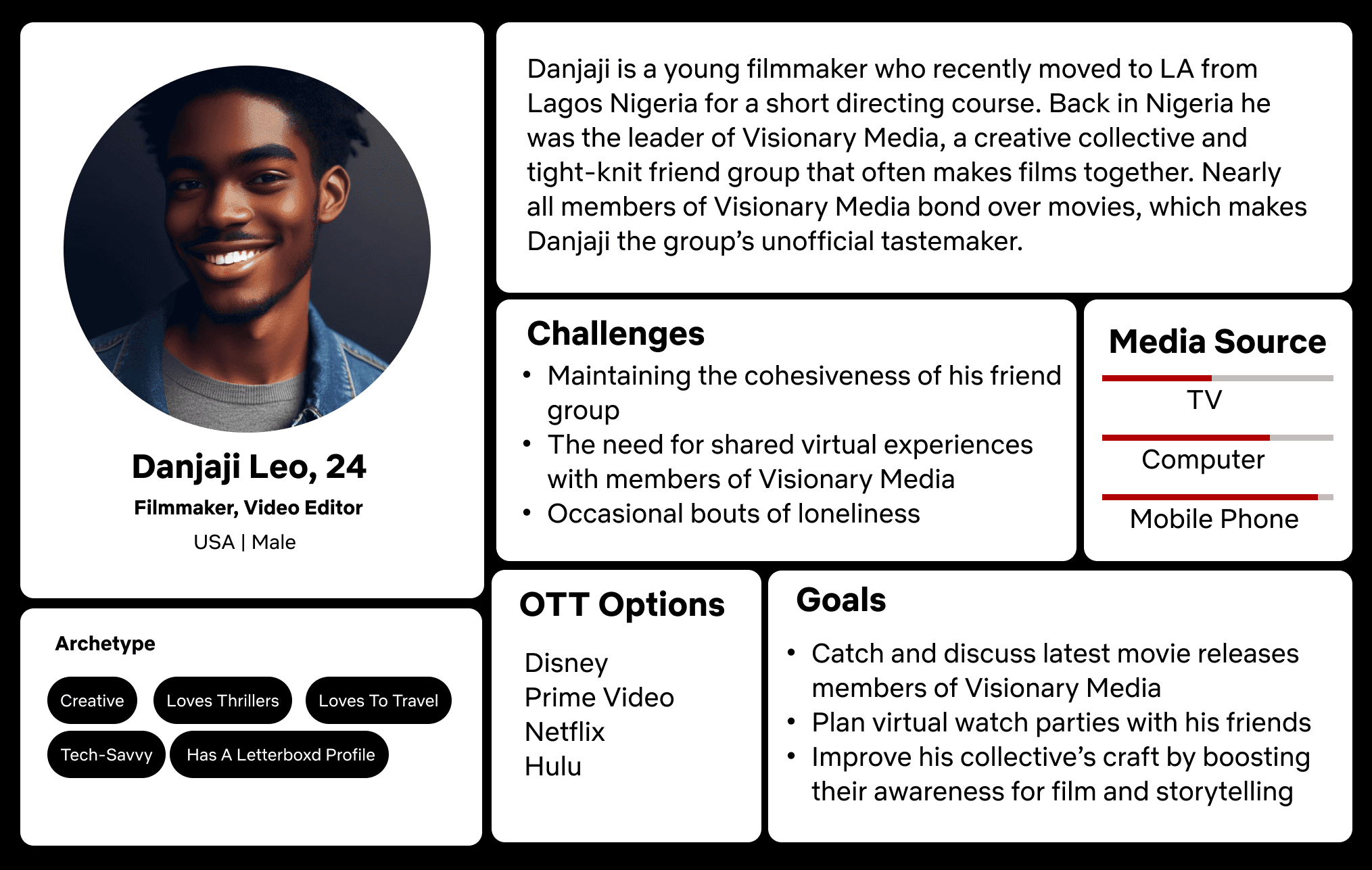
Users and Audience: Who Is This For?
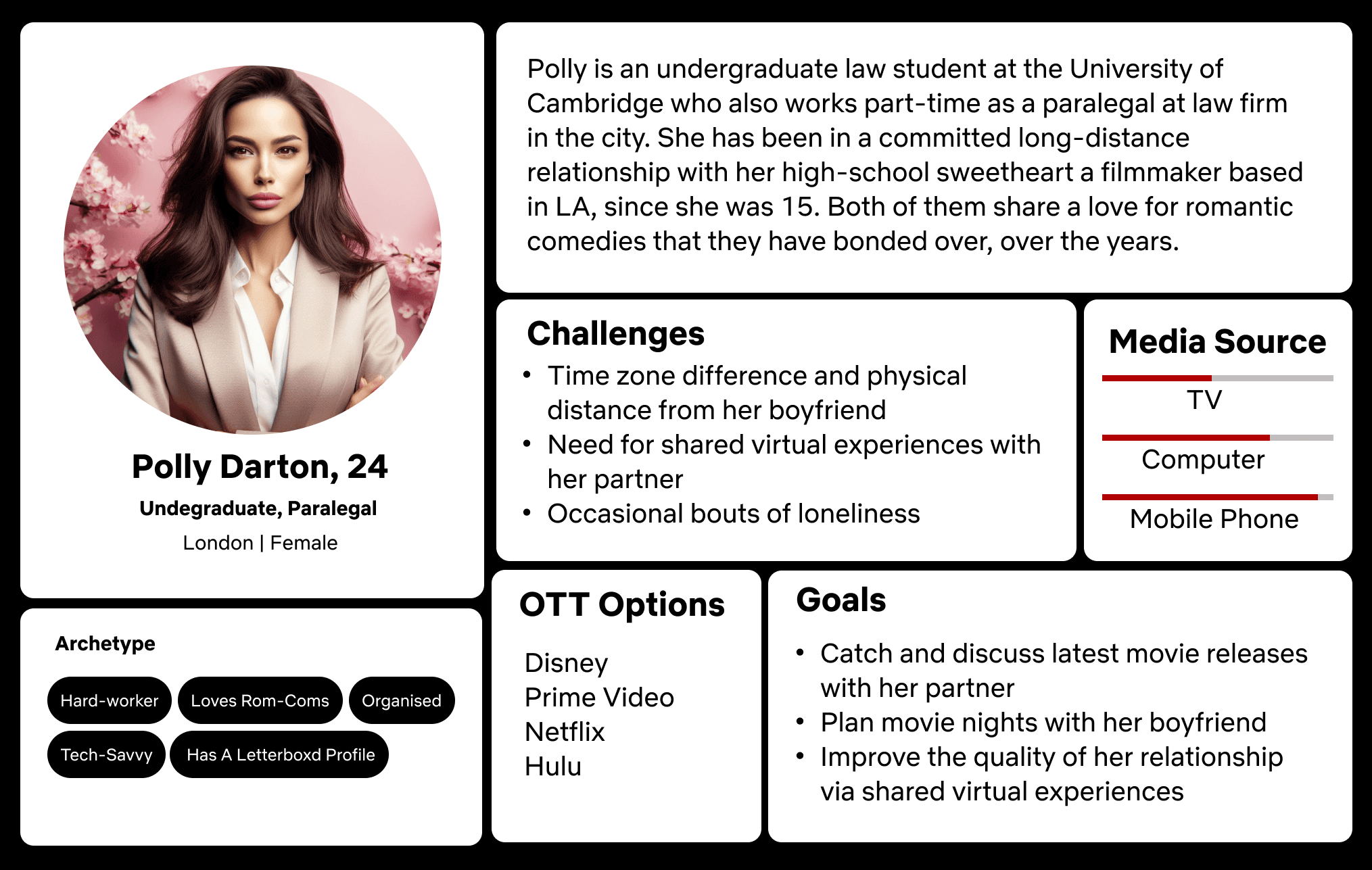
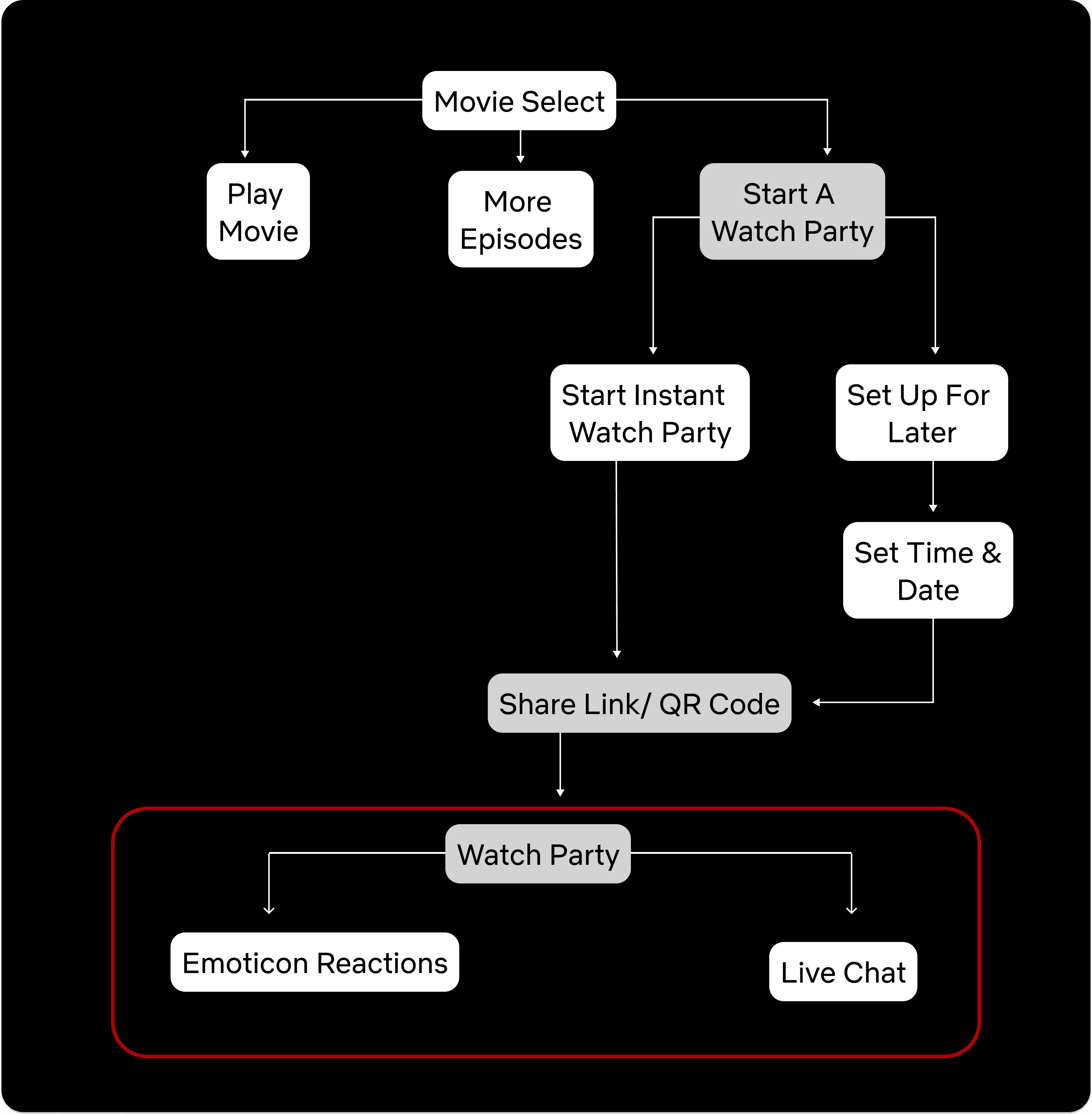
User Flow
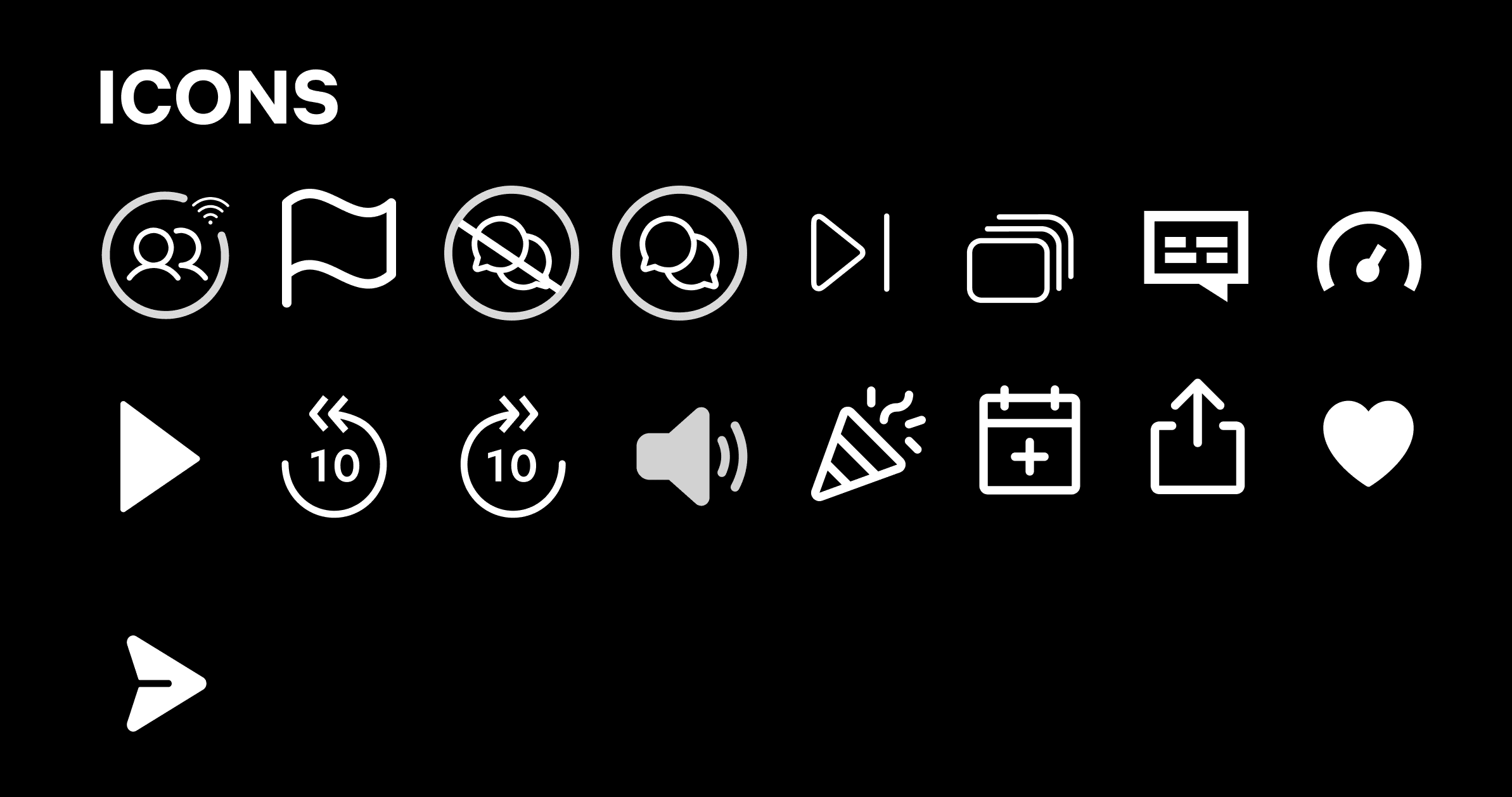
Visual Design

Sample navigation from content expansion to setting up an instant watch party. (Note: that the URL path is short and easy to recall to enable easy shareability by speech or text with friends and family.)

Sample navigation from content expansion to scheduling a watch party for a later date or time
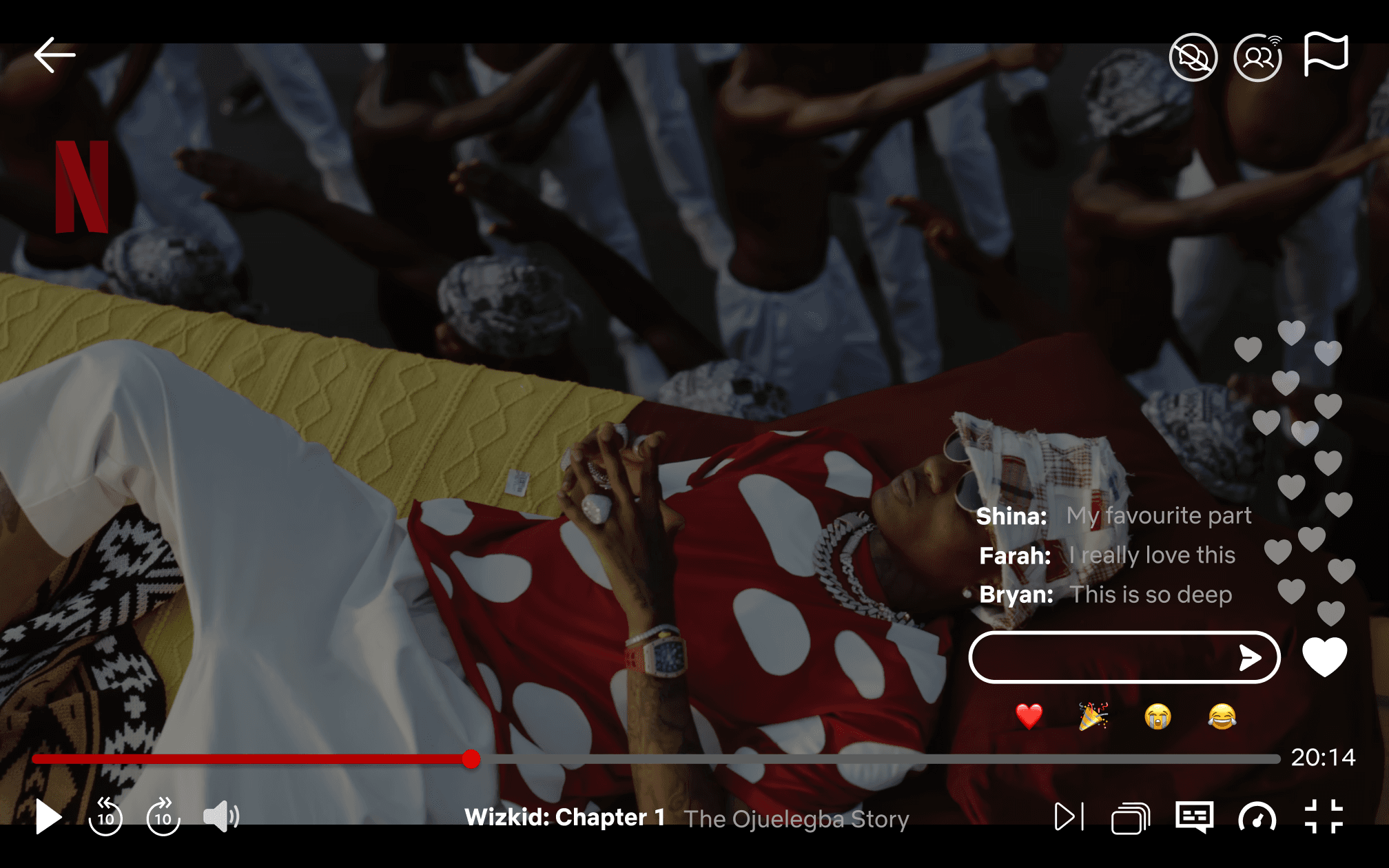
Live chat feature with emoticons minimal and by bottom right of an paused screen to avoid distracting from the content being streamed. (Note: Users who don't want to participate in a live chat will be able to toggle the live chat feature off and on with first top right button.)
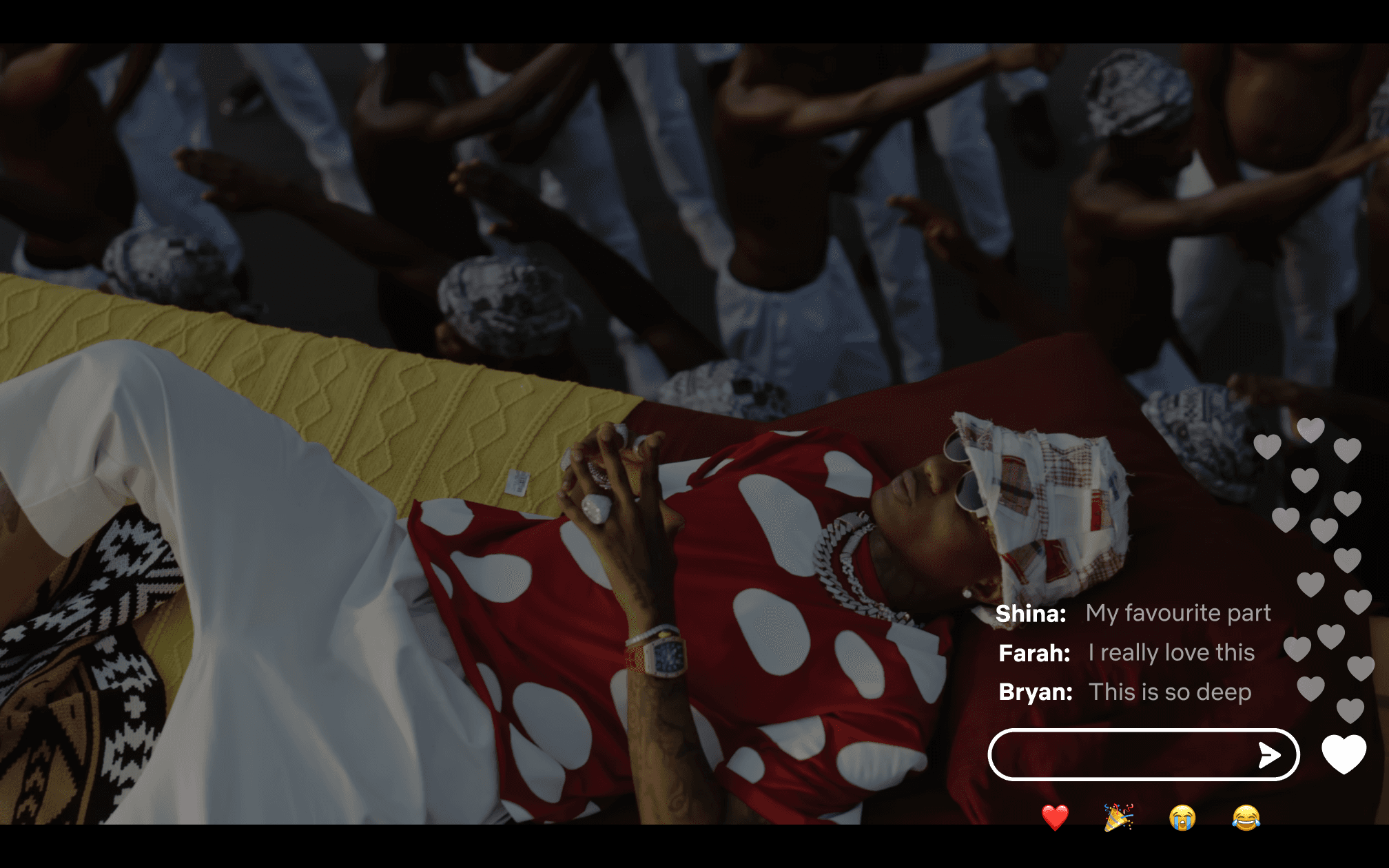
Live chat feature with emoticons minimal and by bottom right of an active screen.
Thanks for Reading!
Netflix Watch Party
(Content Design Strategy) Rethinking Netflix Party, a social-streaming Google chrome extension that became popular during the COVID-19 lockdowns, as native feature
© Toye Sokunbi
Role: Product Designer, Content Strategist
Duration: 3 weeks
Background
At the height of the 2020 pandemic, a Google Chrome extension called Netflix Party (now known as Teleparty) gained popularity as a social streaming feature that allowed friends to watch, emote and live-chat while streaming the same shows and movies. The concept itself didn't seem revolutionary at the time, but many people who were experiencing a doom-scrolling fatigue many months deep into months of isolation and lockdown, were desperate for innovative new ways to connect with their friends. Netflix Party was one of such products that gained steam as a result.
The popularity and perhaps use of Netflix party has petered since the end of the COVID-19 lockdowns, for a host of reasons ranging from limitations to only web browsers, to increasing concerns about security since it's a third-party service and Netflix has become stricter with who/what can access its API. Regardless, this change in popularity for Netflix Party hasn't changed audience demands for a fix to a core usability gap in the actual Netflix app: The absence of a social streaming feature.
The Problem
Thanks to the internet and globalisation, humanity may be in its most interconnected time in recorded history, but it's also somewhat the loneliest time. A recent study by Meta and Gallup across 140 countries revealed that nearly a quarter of the world's population feels lonely. It also doesn't help that due to rising global inflation many people are constantly working and therefore the struggle of balancing work and life becomes increasingly difficult.
Nearly all of Netflix's competitors have recognised this need for humans to have a sense of community in spite of the digital age, and to the effect, they all have a version of a Watch Party feature built into nearly all of their products. As the biggest movie and TV streamer in this market (by user base), Netflix has the opportunity to play its part in alleviating loneliness through an in-built group-streaming feature that allows friends and family to enjoy video content remotely.
Design Objectives
Ideate and visualise what a group streaming feature would functionally look like if it was built into the Netflix app
Introduce social elements to video streaming that doesn't sacrifice the core purpose of Netflix, which is to watch movies
The Process
Scope: SWOT Analysis, Competitor Analysis, UX Research, UI Design & Prototyping
Tools: Figma, Google Sheets
Since 2020 when Amazon's Prime Video first launched its Watch Party feature, several streamers have followed suit, including Disney+'s GroupWatch (now discontinued), Hulu's Watch-Party and Apple's iOS-MacOS native, SharePlay. Yet, mounting pressure from the competition still hasn't forced Netflix's hand to release a group-streaming feature.
My Approach
The obvious big question is why? Why hasn't Netflix introduced a Watch Party feature? The table above attempts to interrogate this question multidimensionally.
While the purpose of this design exercise is not to convince Netflix to develop and launch a Watch Party feature, I believe it is important to explore all the ways, a feature like this will improve user experience—especially when compared against what other players in the market are doing.
Market Analysis: Is the grass greener on the other side?
Prime Video: Amazon's Prime Video offers a Watch Party feature on native Android, iOS and Smart TV apps. Prime Video also offers a chat service for up to 100 friends who are also Prime Video subscribers, however, this chat feature is only accessible via native apps and supported browsers. Except for shows and TV shows exclusively available for rent or purchase, all other video content available on Prime Video can be group-streamed seamlessly.
Hulu: Hulu allows users to sync up to 8 friends on a single Watch Party. However, this feature only works on supported browsers and is available for 18 years and older subscribers.
Shareplay by Apple: Across Apple macOS, iOS and tvOS, users have the ability to use Apple's inbuilt screen-share to host group streams over FaceTime. In addition to owning an Apple device to gain access to SharePlay, there are also other obvious limitations such as in-stream chat being limited to only iMessage and hosts only being able to link up to 32 people.
Market Analysis: Conclusions
Group-streaming features are neither seamless to use, nor are they universally accessible to all users. Obvious limitations due to browser support, device requirements, age restrictions, and a cap on the number of guests who can join a group stream but to name a few, are examples of all the ways including a group stream feature may be both a software engineering and a logistical nightmare. The problem though, is that in the OTT (over-the-top) video market, audiences reign supreme.
Evidence that group-streaming features are beloved by users who are willing to jump over all the usability hoops, can be summarised by the reactions to Disney+ silently pulling the plug on its Group Watch feature last year. Before Disney stealthy discontinued Group Watch, there had been occasional reports since the feature launched in 2020 of users being unable to load up Group Watch due to serverside issues at Disney. However, discomfort with the service didn't stop users from being heartbroken by the complete decommissioning of the feature. In fact, after the news became public, some users went as far as announcing that they would discontinue their subscription to the streaming service.
SWOT Analysis
Strengths: At the time of this analysis, Netflix has the largest user base of all OTT providers globally. That audience is served via a user-friendly interface, a diverse content library and a recommendation algorithm that ensures user personalisation.
Weaknesses: Aside from Watch Parties, the subject matter of this design exercise, Netflix's offerings for live content are very limited, especially for live sports, a product feature that many of its competitors including AppleTV, Disney and Hulu currently offer
Opportunities: Investing and launching a watch party feature. If this is combined with a foray into live sports streaming, Netflix may be heading for the moon as far as maintaining its lead in the market goes. The rapid rate of innovation in VR and AR spaces could also provide an opportunity for Netflix to tap into immersive storytelling to differentiate from competitors. This could pair nicely with attempts by the streaming giant to play in fields of gaming and interactive choose-your-own-adventure storytelling. All these can and will serve as complimentary features to the social element of a Watch Party feature.
Threats: The biggest threat to Netflix today is trends in short video consumption like TikTok and Instagram Reels. With dwindling attention spans, there's increasing demand for localised content, as such brands like Netflix will have to invest heavily in local content producers. But even this strategy may be a doomed race for the bottom. For example in India, Disney+ Hotstar, Amazon Prime, Netflix and Zee account for most OTT revenues. But even these corporate giants have to struggle for subscription dollars with nearly 40 other streamers, who may be better positioned to serve localised niche audiences.
Users and Audience: Who Is This For?
User Flow
Visual Design
Sample navigation from content expansion to setting up an instant watch party. (Note: that the URL path is short and easy to recall to enable easy shareability by speech or text with friends and family.)
Sample navigation from content expansion to scheduling a watch party for a later date or time
Live chat feature with emoticons minimal and by bottom right of an paused screen to avoid distracting from the content being streamed. (Note: Users who don't want to participate in a live chat will be able to toggle the live chat feature off and on with first top right button.)
Live chat feature with emoticons minimal and by bottom right of an active screen.
Thanks for Reading!
Netflix Watch Party
(Content Design Strategy) Rethinking Netflix Party, a social-streaming Google chrome extension that became popular during the COVID-19 lockdowns, as native feature
© Toye Sokunbi
Role: Product Designer, Content Strategist
Duration: 3 weeks
Background
At the height of the 2020 pandemic, a Google Chrome extension called Netflix Party (now known as Teleparty) gained popularity as a social streaming feature that allowed friends to watch, emote and live-chat while streaming the same shows and movies. The concept itself didn't seem revolutionary at the time, but many people who were experiencing a doom-scrolling fatigue many months deep into months of isolation and lockdown, were desperate for innovative new ways to connect with their friends. Netflix Party was one of such products that gained steam as a result.
The popularity and perhaps use of Netflix party has petered since the end of the COVID-19 lockdowns, for a host of reasons ranging from limitations to only web browsers, to increasing concerns about security since it's a third-party service and Netflix has become stricter with who/what can access its API. Regardless, this change in popularity for Netflix Party hasn't changed audience demands for a fix to a core usability gap in the actual Netflix app: The absence of a social streaming feature.
The Problem
Thanks to the internet and globalisation, humanity may be in its most interconnected time in recorded history, but it's also somewhat the loneliest time. A recent study by Meta and Gallup across 140 countries revealed that nearly a quarter of the world's population feels lonely. It also doesn't help that due to rising global inflation many people are constantly working and therefore the struggle of balancing work and life becomes increasingly difficult.
Nearly all of Netflix's competitors have recognised this need for humans to have a sense of community in spite of the digital age, and to the effect, they all have a version of a Watch Party feature built into nearly all of their products. As the biggest movie and TV streamer in this market (by user base), Netflix has the opportunity to play its part in alleviating loneliness through an in-built group-streaming feature that allows friends and family to enjoy video content remotely.
Design Objectives
Ideate and visualise what a group streaming feature would functionally look like if it was built into the Netflix app
Introduce social elements to video streaming that doesn't sacrifice the core purpose of Netflix, which is to watch movies
The Process
Scope: SWOT Analysis, Competitor Analysis, UX Research, UI Design & Prototyping
Tools: Figma, Google Sheets
Since 2020 when Amazon's Prime Video first launched its Watch Party feature, several streamers have followed suit, including Disney+'s GroupWatch (now discontinued), Hulu's Watch-Party and Apple's iOS-MacOS native, SharePlay. Yet, mounting pressure from the competition still hasn't forced Netflix's hand to release a group-streaming feature.
My Approach
The obvious big question is why? Why hasn't Netflix introduced a Watch Party feature? The table above attempts to interrogate this question multidimensionally.
While the purpose of this design exercise is not to convince Netflix to develop and launch a Watch Party feature, I believe it is important to explore all the ways, a feature like this will improve user experience—especially when compared against what other players in the market are doing.
Market Analysis: Is the grass greener on the other side?
Prime Video: Amazon's Prime Video offers a Watch Party feature on native Android, iOS and Smart TV apps. Prime Video also offers a chat service for up to 100 friends who are also Prime Video subscribers, however, this chat feature is only accessible via native apps and supported browsers. Except for shows and TV shows exclusively available for rent or purchase, all other video content available on Prime Video can be group-streamed seamlessly.
Hulu: Hulu allows users to sync up to 8 friends on a single Watch Party. However, this feature only works on supported browsers and is available for 18 years and older subscribers.
Shareplay by Apple: Across Apple macOS, iOS and tvOS, users have the ability to use Apple's inbuilt screen-share to host group streams over FaceTime. In addition to owning an Apple device to gain access to SharePlay, there are also other obvious limitations such as in-stream chat being limited to only iMessage and hosts only being able to link up to 32 people.
Market Analysis: Conclusions
Group-streaming features are neither seamless to use, nor are they universally accessible to all users. Obvious limitations due to browser support, device requirements, age restrictions, and a cap on the number of guests who can join a group stream but to name a few, are examples of all the ways including a group stream feature may be both a software engineering and a logistical nightmare. The problem though, is that in the OTT (over-the-top) video market, audiences reign supreme.
Evidence that group-streaming features are beloved by users who are willing to jump over all the usability hoops, can be summarised by the reactions to Disney+ silently pulling the plug on its Group Watch feature last year. Before Disney stealthy discontinued Group Watch, there had been occasional reports since the feature launched in 2020 of users being unable to load up Group Watch due to serverside issues at Disney. However, discomfort with the service didn't stop users from being heartbroken by the complete decommissioning of the feature. In fact, after the news became public, some users went as far as announcing that they would discontinue their subscription to the streaming service.
SWOT Analysis
Strengths: At the time of this analysis, Netflix has the largest user base of all OTT providers globally. That audience is served via a user-friendly interface, a diverse content library and a recommendation algorithm that ensures user personalisation.
Weaknesses: Aside from Watch Parties, the subject matter of this design exercise, Netflix's offerings for live content are very limited, especially for live sports, a product feature that many of its competitors including AppleTV, Disney and Hulu currently offer
Opportunities: Investing and launching a watch party feature. If this is combined with a foray into live sports streaming, Netflix may be heading for the moon as far as maintaining its lead in the market goes. The rapid rate of innovation in VR and AR spaces could also provide an opportunity for Netflix to tap into immersive storytelling to differentiate from competitors. This could pair nicely with attempts by the streaming giant to play in fields of gaming and interactive choose-your-own-adventure storytelling. All these can and will serve as complimentary features to the social element of a Watch Party feature.
Threats: The biggest threat to Netflix today is trends in short video consumption like TikTok and Instagram Reels. With dwindling attention spans, there's increasing demand for localised content, as such brands like Netflix will have to invest heavily in local content producers. But even this strategy may be a doomed race for the bottom. For example in India, Disney+ Hotstar, Amazon Prime, Netflix and Zee account for most OTT revenues. But even these corporate giants have to struggle for subscription dollars with nearly 40 other streamers, who may be better positioned to serve localised niche audiences.
Users and Audience: Who Is This For?
User Flow
Visual Design
Sample navigation from content expansion to setting up an instant watch party. (Note: that the URL path is short and easy to recall to enable easy shareability by speech or text with friends and family.)
Sample navigation from content expansion to scheduling a watch party for a later date or time
Live chat feature with emoticons minimal and by bottom right of an paused screen to avoid distracting from the content being streamed. (Note: Users who don't want to participate in a live chat will be able to toggle the live chat feature off and on with first top right button.)
Live chat feature with emoticons minimal and by bottom right of an active screen.